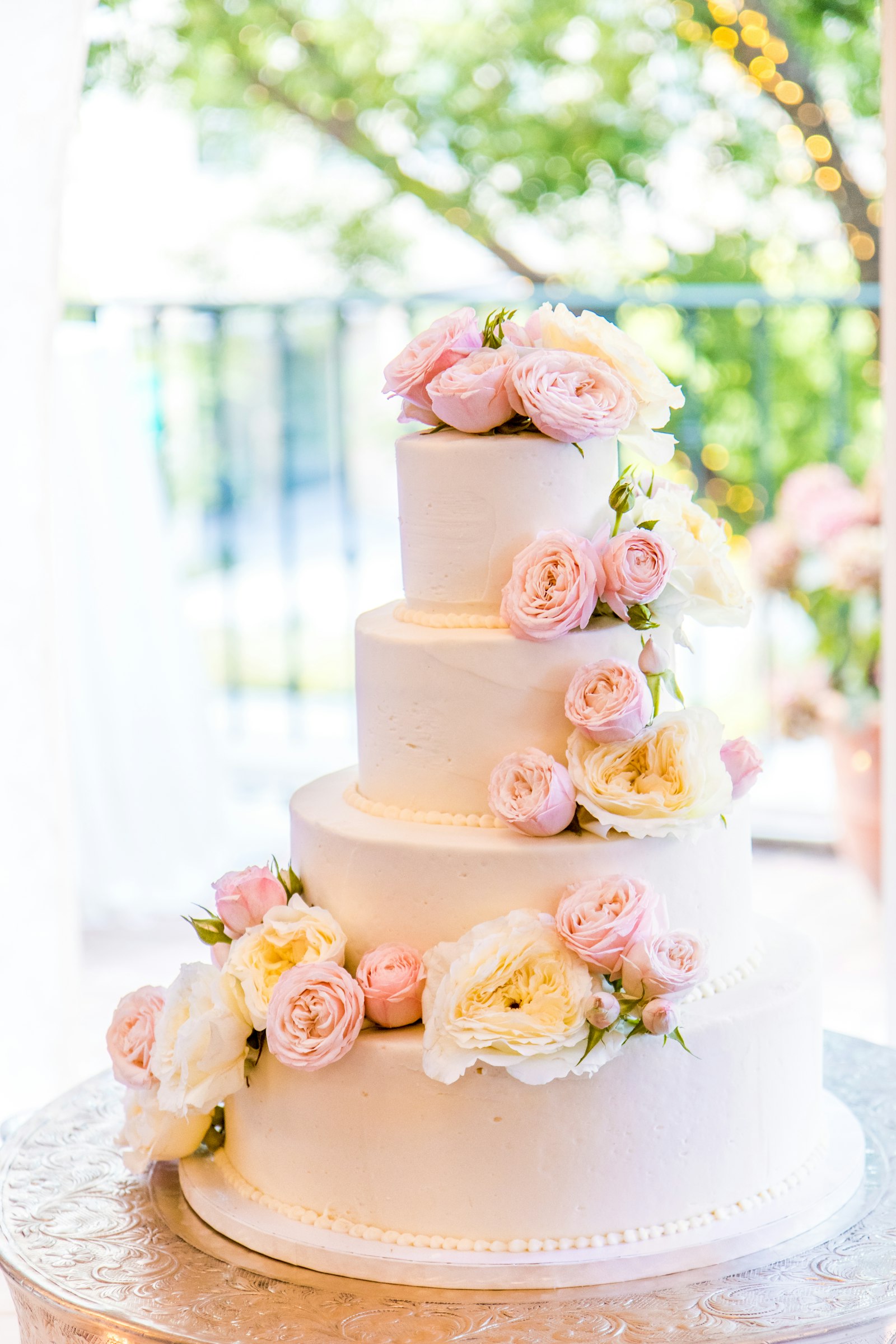
The cake cutting happens in that dead zone between dinner service and dancing—when energy dips. The cake moment is supposed to revive things. First, visually. It needs to photograph well. Second, the cutting itself—brief ceremony, couple's hands overlapped on the knife.
The cake cutting happens in that dead zone between dinner service and dancing—when energy dips, when guests are full but not quite ready to move. The cake moment is supposed to revive things. First, visually. It needs to photograph well because everyone’s phones come out. Second, the cutting itself—brief ceremony, couple’s hands overlapped on the knife, first bite feed to each other. Then it disappears back to be sliced and served.
What matters: it needs to look intentional in photos, and it shouldn’t taste like disappointment when it reaches the table.
Trending Cake Designs
The 2026 aesthetic moved away from heavy fondant perfection. Smooth, immaculate finishes are giving way to texture—intentional imperfection that reads as artisanal rather than flawed.
Minimalist Textures & Wafer Paper Flowers
Buttercream is back. Not the crusting buttercream that hardens into a shell, but soft Swiss meringue or Italian buttercream that holds shape without feeling dry.
The current approach: textured finish. Palette knife swipes that create wave patterns. Intentionally visible frosting strokes. It photographs with dimension—light catches the ridges. And it’s more forgiving in Kenyan heat than fondant, which sweats and sags.
Wafer paper flowers replaced the sugar flowers that dominated the 2010s. Wafer paper is edible rice paper—thin, translucent, can be painted with food coloring. Skilled bakers layer petals to create peonies, roses, anemones that look almost real from three feet away. Lighter than sugar flowers. More organic appearance.
Cakehouse Kenya (Lavington) leads this locally. Their signature style: three-tier buttercream cake with watercolor-effect wafer paper blooms cascading down one side. KES 45,000-65,000 depending on complexity. Serves 100-120 guests. Flavor options include lemon-elderflower, vanilla-raspberry, chocolate-salted caramel.
Metallic Accents & Geometrics
Contrasting trend: high glamour. Gold leaf. Edible metallic paint. Sharp geometric patterns (hexagons, triangles, chevrons) created with fondant panels or piped royal icing.
This works for formal ballroom weddings. Modern industrial venues. It clashes with garden romance—know your venue aesthetic before committing.
The Cake Studio (Westlands) specializes in this. Their portfolio shows four-tier cakes with gold-painted fondant tiers alternating with textured buttercream. Geometric wire toppers (gold-dipped wire formed into abstract shapes). KES 55,000-85,000 for 100-guest cakes.
Metallic finishes photograph strikingly in evening light—if your reception runs into sunset or has dramatic uplighting, this works. In harsh midday sun, it can look garish. Timing matters.
Flavor Pairings Your Guests Will Love
Traditional Kenyan wedding cake is fruit cake—dense, alcohol-soaked, divisive. Half your guests love it. The other half won’t touch it. Most modern couples offer multiple flavors across tiers or as separate cutting cake + sheet cakes.
The Contemporary Options
Red Velvet: Safe choice. Universally recognized. Cream cheese frosting standard. But it’s been done extensively—it won’t surprise anyone. If you’re going red velvet, make it exceptional (cocoa quality, frosting-to-cake ratio) or pick something else.
Salted Caramel: Currently popular. Vanilla or chocolate base, salted caramel buttercream, optional caramel drip. The salt cuts the sweetness—works well for Kenyan palates that tend toward less-sweet desserts than American wedding cakes.
Passion Fruit: Local ingredient. Tropical without being cliché. Usually white or vanilla cake with passion fruit curd filling and passion fruit buttercream. Baking Lovely (Karen) does this well—KES 38,000 for three-tier serving 80-100. The tartness balances rich dinner food.
Lemon-Poppy Seed: Light. Refreshing. Works for outdoor daytime weddings. Pairs with tea service if you’re doing afternoon reception. Less common, which makes it memorable.
Chocolate Variations: If you’re serving chocolate cake, specify the type. Milk chocolate reads juvenile. Dark chocolate (60-70% cacao) feels sophisticated. Add layers—chocolate cake, chocolate ganache, coffee buttercream. The coffee enhances chocolate without reading as mocha.
Champagne Cake: Actual champagne in the batter and buttercream. Subtle flavor, more about the concept than dramatic taste. Pairs with berry compotes.
Multi-Tier Flavor Strategy
Most bakers allow different flavors per tier:
- Bottom tier (largest): most popular/safe flavor (vanilla or chocolate)
- Middle tier: adventurous option (passion fruit, champagne)
- Top tier: groom’s favorite or traditional fruit cake for cutting ceremony
Or skip tiered cake entirely. Cutting cake for display and ceremony (2-3 tiers, serves 30-40), sheet cakes in back for actual serving (multiple flavors, feeds everyone else). Cost-effective. Gives flavor variety without complicated tier construction.
Sizing Guide: How Many Tiers Do You Need?
Cake serving sizes are deceptively small. Standard wedding cake slice is 1” x 2” x 4”—smaller than most people expect.
Serving calculations:
- 6” round tier: 12-15 servings
- 8” round tier: 24-30 servings
- 10” round tier: 38-45 servings
- 12” round tier: 56-65 servings
For 100 guests:
- Three-tier (6”, 8”, 10”): Serves 75-90. Add sheet cake or extra tier.
- Four-tier (6”, 8”, 10”, 12”): Serves 130-155. More than enough, but better to have excess than run short.
Most Kenyan bakers recommend ordering 10-15% over guest count. Not everyone eats cake, but running out mid-service looks bad.
Height matters too: Standard tiers are 4” tall. “Tall” or “extra-tall” tiers (5-6” height) are trending—they photograph more dramatically but cost 30-40% more due to additional batter and frosting.
The Dessert Table: Alternatives to Traditional Cake
Some couples skip the tiered cake completely.
Cupcake towers: Arranged on tiered stand. Multiple flavors. Guests self-serve. Pro: no slicing logistics, portion control, variety. Con: doesn’t have the same ceremony moment as cutting a cake. Sweet Ginger Cakes (Nairobi) offers cupcake packages—KES 220 per cupcake, minimum 100 pieces. Custom flavors and decorations.
Donut walls: Instagram moment. Pegboard wall with donuts hanging on pegs. Usually savory reception exit treat rather than main dessert. Guests grab on their way out. Urban Bites provides rental donut walls (KES 18,000 including 100 assorted donuts).
Dessert bars: Variety station. Mini cheesecakes, brownies, tarts, macarons, cookies. Labor-intensive to coordinate but offers something for everyone. Java House Catering includes dessert bar options in their packages (KES 450 per person for full dessert bar, minimum 80 guests).
Naked cakes: “Naked” means unfrosted sides—you see the cake layers and filling. Very 2018-2020. Still works for rustic/outdoor weddings but feels dated for formal venues. If you’re considering this, make sure the cake layers themselves photograph well—uneven layers or messy filling show obviously.
Top Cake Artists in Kenya
Premium Tier (KES 50,000-120,000+)
The Cake Studio (Westlands): Mentioned earlier. Geometric designs, metallic finishes, precision work. Portfolio shows high-gloss fondant and modern architectural cakes. Four-week minimum lead time. Tasting appointments required (KES 5,000, credited toward order).
Cakehouse Kenya (Lavington): Wafer paper florals, textured buttercream, romantic garden aesthetic. Reliable. Professional setup and breakdown service included. Three-week lead time minimum.
Bliss Cakes (Karen): Bespoke service. They’ll replicate runway cake designs or create custom based on your wedding palette and theme. Pricing starts KES 65,000 for basic three-tier, escalates quickly with complexity. Include sugar flowers, hand-painting, or sculpted elements and you’re in KES 100,000+ territory.
Mid-Range (KES 30,000-50,000)
Baking Lovely (Karen): Strong flavor execution. Less focus on elaborate decoration, more on taste. Their passion fruit and salted caramel cakes consistently get positive reviews. Simple buttercream finish. Fresh flowers for decoration (you provide, they arrange). KES 35,000-48,000 for three-tier.
Njoki’s Creative Cakes (Thika Road): Fondant specialist. Clean lines. Good for couples who want classic stacked tiers with ribbon or pearl details. Less adventurous in flavor—vanilla, chocolate, red velvet standards—but solid construction. KES 32,000-45,000 range.
Budget-Conscious (Under KES 30,000)
Sweet Ginger Cakes (Nairobi): Volume operation. They do 5-8 weddings per weekend during high season. Quality is consistent but not groundbreaking. Buttercream finish, simple decoration, reliable flavors. Three-tier KES 25,000-28,000. Won’t win design awards but won’t disappoint guests either.
Zipporah’s Cakes (Eastlands): Home baker who scaled up. Takes fewer orders, more personalized service. Pricing competitive (three-tier KES 22,000-32,000). Design complexity limited by equipment, but flavor profiles are strong. If you want creative flavors without premium pricing, worth consulting.
Cake Logistics Nobody Tells You About
Delivery and setup: Most bakers include delivery within Nairobi for orders above KES 35,000. Destination weddings (Naivasha, coast) add KES 8,000-15,000 delivery fee plus travel time considerations. Assembly time on-site is 45-90 minutes depending on complexity. Coordinate with venue on setup access times.
Cake table requirements: Standard cake table is 36” round or 30” x 48” rectangle. Needs to be sturdy—multi-tier cakes are heavy. Tablecloth to floor (draped, not fitted). Skirting optional but elevates presentation. Backdrop wall or arch behind the cake table creates better photos.
Temperature control: Buttercream cakes hold up to 24°C reasonably well. Above that, structure becomes questionable. If your reception is outdoors in hot weather (coast, midday Nairobi), discuss refrigeration logistics with venue and baker. Some bakers deliver the cake in sections and assemble on-site after final tier has been refrigerated until last moment.
Cutting service: Most venues provide cake cutting service if you’re using their catering. If outside caterer, confirm who’s responsible for cutting and plating. You need designated staff with proper knives and plate stock. This isn’t the time for improvisation.
Top tier preservation: Traditional practice is freezing the top tier for first anniversary. Requires proper wrapping (plastic wrap + aluminum foil, airtight container). Honestly? Frozen cake a year later is never as good as fresh. If the tradition matters to you, ask your baker to make a small 6” replica on your anniversary instead.
Cake knife and server: You’re expected to provide this. Matching set runs KES 3,500-8,000 depending on how decorative you want. It appears in cutting photos, so consider whether it matches your aesthetic. Some couples rent or borrow from family who have wedding cake sets.
The Cutting Ceremony Photo
This moment is highly photographed. Optimize it.
Positioning: Face your photographer, not your guests. Photographer positions at 45-degree angle to catch both of you and the cake.
Lighting: If cutting happens after dark, venue lighting matters. Uplighting on the cake table. Possibly a spotlight. Coordinate with photographer and DJ/lighting crew.
Hand placement: Both hands on the knife handle, groom’s hand over bride’s. Cut the bottom tier (it’s already closest to you). Don’t saw—one firm downward cut, then pull toward you. Practice this the night before with a loaf of bread if you’re nervous.
Feeding each other: Be kind. Smashing cake in each other’s faces is declining trend—it ruins makeup and sets antagonistic tone. Small bite, smile, laugh. Keep it sweet.
When to Order
12 months out: Too early. Bakers don’t book that far ahead for most weddings.
6 months out: Good timing. Premium bakers fill up 4-6 months ahead during peak season (December, August).
3 months out: You’re limited to mid-range options. Premium bakers likely booked.
6 weeks out: Emergency territory. You’ll find someone but you’re taking what’s available, not what you want.
Book tastings early (8-10 months out) but understand that confirming the order usually happens 4-6 months before wedding date.
What Actually Matters
The cake appears in photos for five minutes. It’s eaten in ten. It costs KES 30,000-80,000 for most couples. That’s 3-6% of a mid-range wedding budget.
Spend enough to avoid embarrassment (dry cake, collapsed tiers, odd flavors). Don’t overspend on elaborate decoration that reads as noise in photos. Prioritize flavor and structure over sugar flower count.
And if you genuinely don’t care about cake? Skip it. Serve another dessert. It’s your wedding.
Browse Cake Vendors by style and price. See real wedding cake galleries in our Inspiration Archive.

Esther Mwansa
• Style & Culture ContributorEsther covers the intersection of fashion, culture, and celebration. Based in Nairobi but raised between Kenya and Zambia, she writes about bridal style that honors heritage while embracing contemporary aesthetics. Her expertise spans traditional ceremonial attire across East African communities, modern bridal fashion, and the practical challenges of dressing for multiple events. She believes every bride should feel like herself—just elevated.